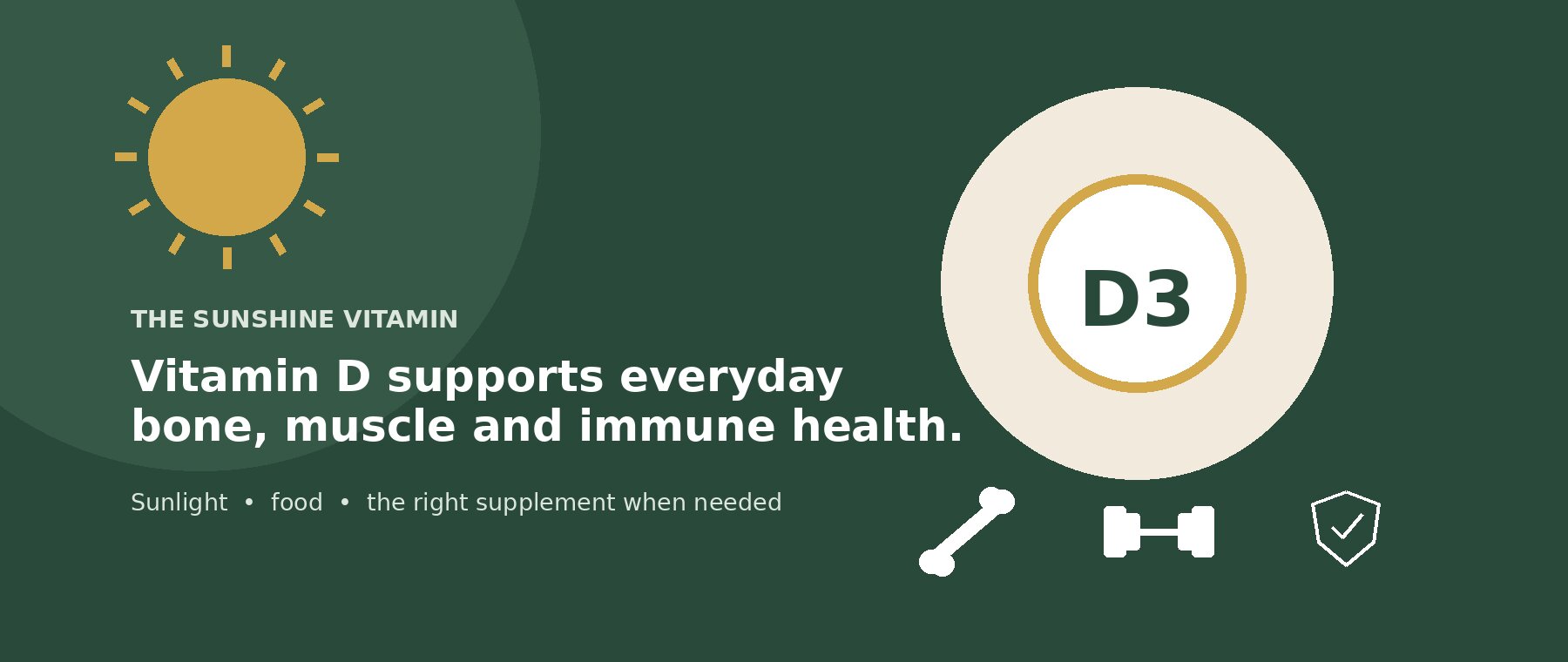
What Vitamin D does, signs you may be low, how much you may need and where Vitamin K2 fits in.
You may know Vitamin D as the ‘sunshine vitamin’, but its role in the body goes well beyond bones. It helps your body absorb calcium, supports muscle function and plays a key role in normal immune system function. Yet low levels can be easy to miss because many people have no obvious symptoms.
During winter, we naturally spend more time indoors and expose less skin to sunlight. People with naturally darker skin, those who cover most of their skin when outdoors, older adults and people with certain health conditions may also find it harder to maintain healthy levels. Understanding your risk — and knowing when to ask for help — can make a real difference.
What exactly is Vitamin D?
Vitamin D is a fat-soluble vitamin that also acts like a hormone in the body. It comes in two main forms: Vitamin D2 (ergocalciferol) and Vitamin D3 (cholecalciferol). Vitamin D3 is the form your skin makes in response to sunlight and is commonly used in supplements.
Once Vitamin D enters the body, the liver and kidneys convert it into forms the body can use. A blood test measures 25-hydroxyvitamin D, or 25(OH)D, which is the main marker used to assess your Vitamin D status.
What does Vitamin D do in the body?
Vitamin D works quietly in the background across several important systems.
-
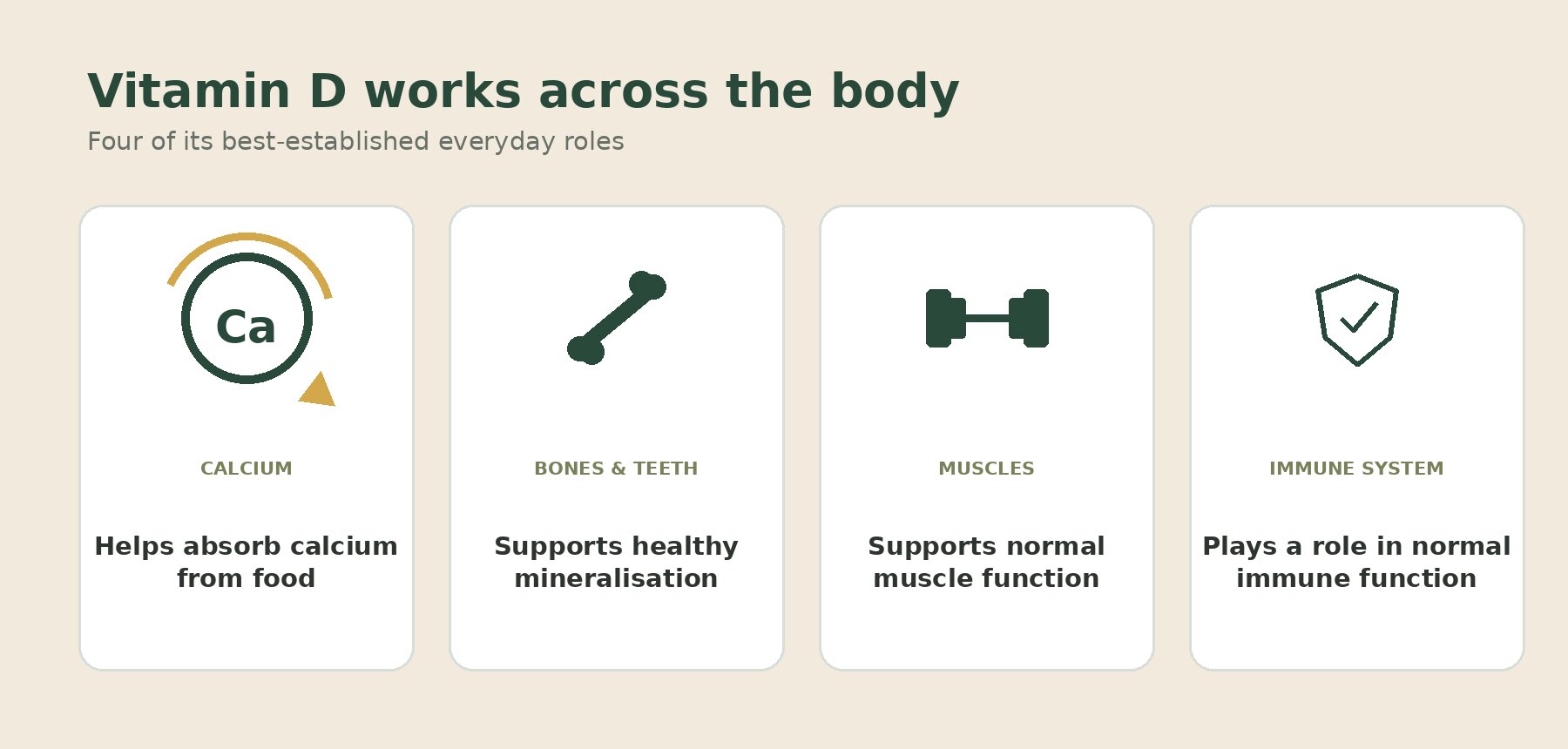
Calcium absorption: it helps the small intestine absorb calcium from food and supports healthy calcium levels in the blood.
-
Bones and teeth: adequate Vitamin D helps support bone mineralisation, strength and healthy teeth. Severe or prolonged deficiency can contribute to osteomalacia in adults and rickets in children.
-
Muscles: Vitamin D supports normal muscle function. Low levels may be associated with weakness and can contribute to falls risk in older adults.
-
Immune function: Vitamin D plays a key role in normal immune system function. Low levels are often linked with getting sick more frequently, although Vitamin D is not a stand-alone treatment or guarantee against infection.
-
Nervous system and general health: Vitamin D is involved in the healthy function of nerves and other tissues throughout the body.
A quick visual summary of Vitamin D’s best-established everyday roles.
What is considered a healthy Vitamin D level?
In Australia, a blood level of at least 50 nmol/L at the end of winter is commonly used as a practical target for bone and muscle health. Results can vary by season, laboratory and individual circumstances, so they should always be interpreted by your healthcare professional.
|
25(OH)D blood level |
General description |
What it means |
|
50 nmol/L or above |
Generally adequate |
Usually considered sufficient for most people’s bone and muscle health. |
|
30–49 nmol/L |
Mild deficiency |
May require lifestyle changes or replacement, depending on risk and clinical advice. |
|
12.5–29 nmol/L |
Moderate deficiency |
Needs professional assessment and an individual treatment plan. |
|
Below 12.5 nmol/L |
Severe deficiency |
Requires medical management; routine self-dosing is not appropriate. |
Guide only: laboratory reference ranges and individual targets may vary.
Signs your Vitamin D may be low
|
Low Vitamin D can be silent When symptoms do occur, they are often subtle and can have many other causes. Possible signs include: |
-
ongoing tiredness or low energy
-
mild bone pain or general aches
-
muscle weakness
-
in children, severe or prolonged deficiency may affect bone growth and contribute to rickets
If these symptoms persist, or you feel you may be at risk, speak with your GP rather than assuming Vitamin D is the cause.
Who is more at risk of Vitamin D deficiency?
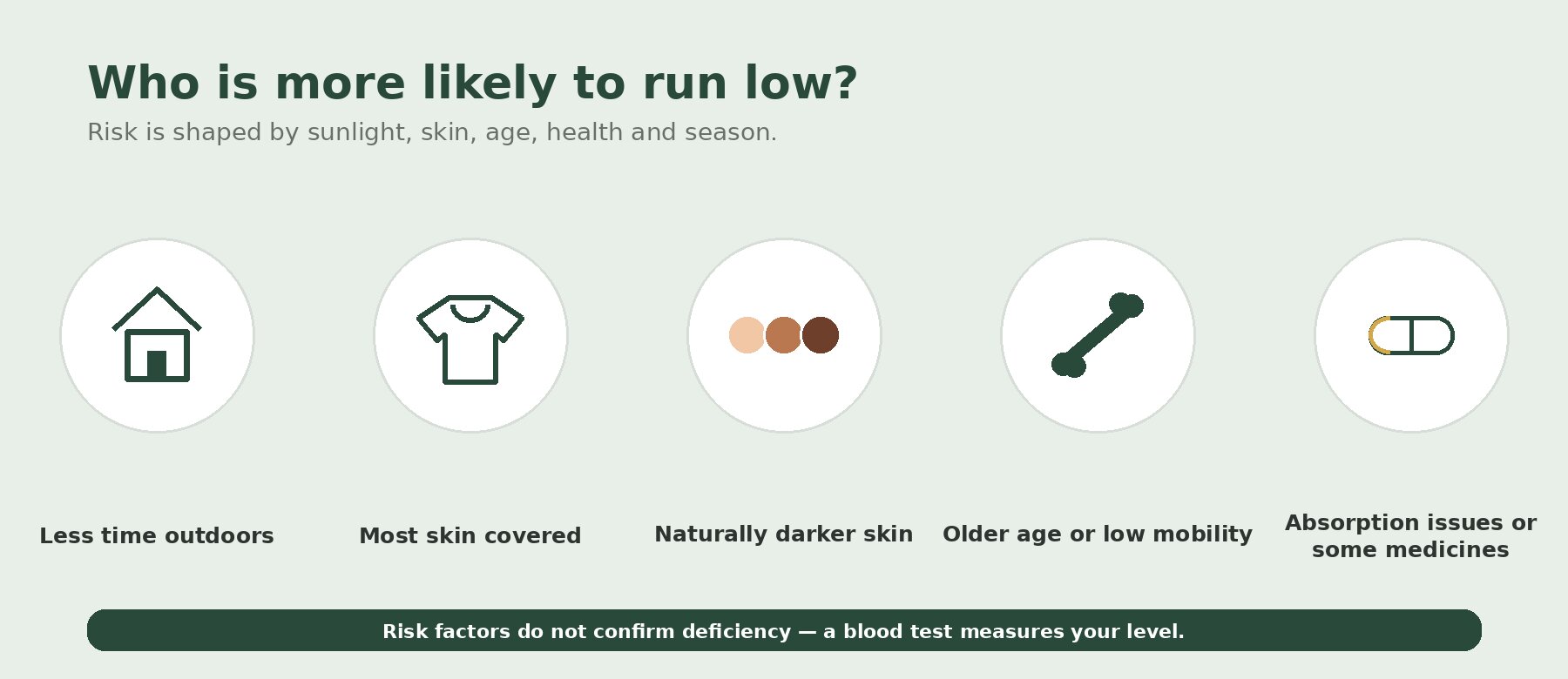
You may be more likely to have low Vitamin D if you:
-
spend most of your time indoors or have very limited sun exposure
-
cover most of your skin with clothing when outdoors
-
have naturally darker skin, which requires more UV exposure to make the same amount of Vitamin D
-
are older, live in residential care or have reduced mobility
-
are pregnant or breastfeeding
-
have advanced kidney disease or a condition that affects fat absorption, such as coeliac disease, Crohn’s disease or ulcerative colitis
-
have had bariatric surgery, have a higher body weight or take medicines that affect Vitamin D metabolism
-
live in a southern part of Australia and get little outdoor time during winter
Being in a higher-risk group does not automatically mean you are deficient. It simply means it is worth discussing your individual needs with a GP, pharmacist or accredited practising dietitian.
Sunlight and food still matter
Most Australians make much of their Vitamin D through regular incidental sun exposure. The amount you need varies with the UV Index, season, location, skin tone and how much skin is uncovered.
When the UV Index is 3 or above, use sun protection. Deliberately staying in strong sun for longer does not keep increasing Vitamin D, but it does increase skin cancer risk. In late autumn and winter in southern Australia, spending time outdoors around the middle of the day may help when the UV Index is below 3. Follow current SunSmart advice for your location.
Food provides smaller amounts. Useful sources include oily fish, eggs, UV-exposed mushrooms and fortified foods such as margarine and some milks. For people who are already deficient, food and sunlight alone may not be enough to restore levels, which is where an appropriate supplement may be recommended.
How much Vitamin D should you take?
There is no single dose that is right for everyone. Your age, blood level, sun exposure, body size, absorption, medical history and other supplements all matter.
For general dietary intake
Australian nutrient reference values list 5 micrograms (200 IU) daily for adults aged 19–50, 10 micrograms (400 IU) for adults aged 51–70 and 15 micrograms (600 IU) for adults over 70. These figures assume some Vitamin D is also made through sun exposure and are not treatment doses for a diagnosed deficiency.
For a confirmed mild deficiency
The RACGP lists 1,000–2,000 IU of Vitamin D3 daily as the usual replacement range for adults with mild, uncomplicated deficiency. Your healthcare professional may recommend a different dose depending on your starting level and individual circumstances.
For moderate or severe deficiency
Higher-dose treatment should be guided by a doctor and is generally used for a defined period. Routine high-dose supplementation is not recommended. If levels are rechecked, the RACGP advises waiting at least three months after starting replacement.
|
More is not always better |
Take Vitamin D with a meal that contains some healthy fat, follow the label and check whether your multivitamin, calcium product or other supplements already contain Vitamin D so you do not accidentally double up.
Why do some Vitamin D formulas include K2?
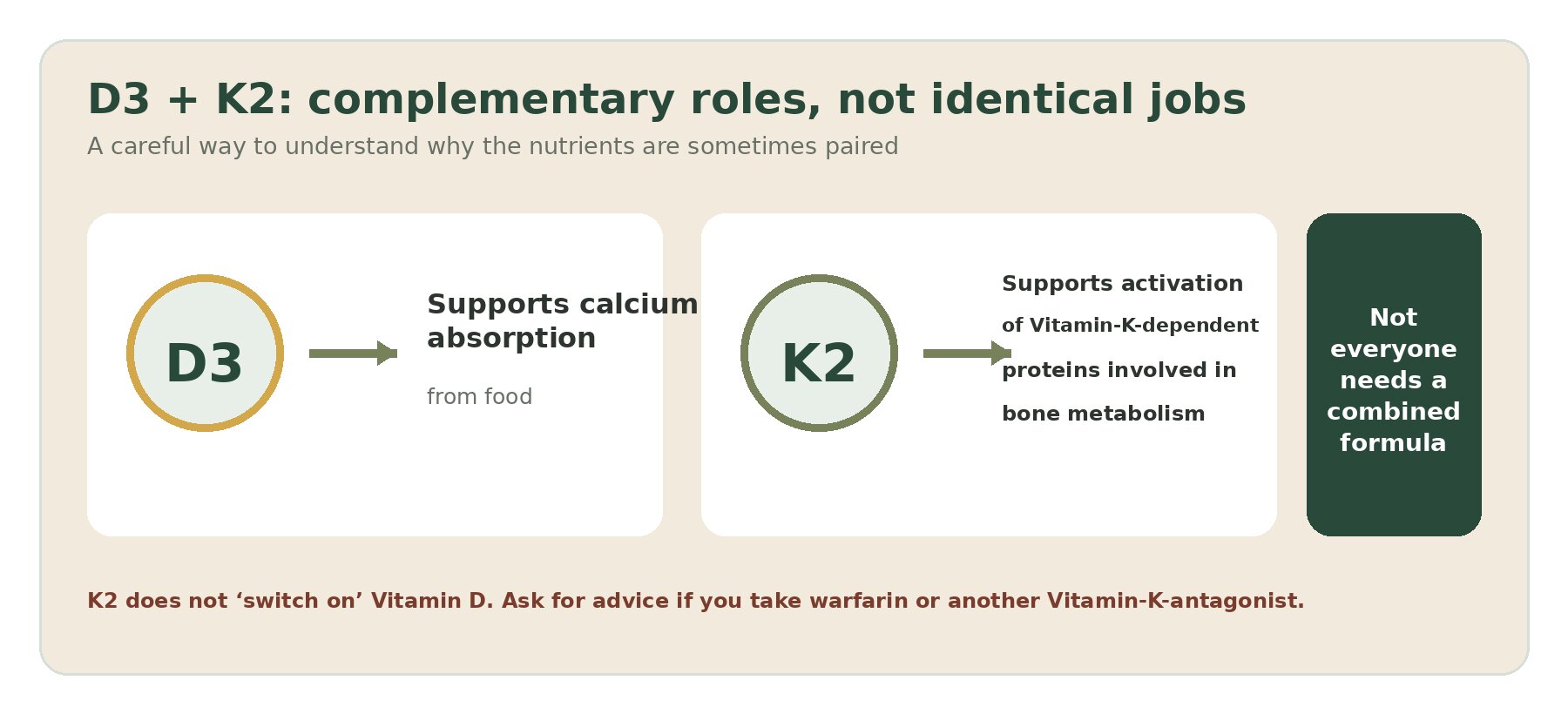
Vitamin D and Vitamin K both contribute to bone health, but they do different jobs. Vitamin D helps increase calcium absorption. Vitamin K is needed to activate several proteins involved in normal blood clotting and bone metabolism. Vitamin K2 is one form of Vitamin K and is often included in combined D3 + K2 formulas because the two nutrients support complementary steps in calcium and bone metabolism.
A careful way to explain the pairing is: Vitamin D3 supports calcium absorption, while Vitamin K2 supports the activation of Vitamin-K-dependent proteins involved in bone metabolism.
It is important not to overstate the evidence. Vitamin K2 does not ‘switch on’ Vitamin D, and Vitamin D can still work without a K2 supplement. Research suggests the combination may support some bone outcomes, but there is not enough evidence to say everyone taking Vitamin D must also take K2 or that the pairing prevents calcium from building up in the arteries.
|
Important if you take blood-thinning medicine |
Vitamin D options available at Organic Instinct
Organic Instinct currently stocks options for adults, children and those who prefer a chewable or liquid format. Always read the current label, because formulations and directions can change.
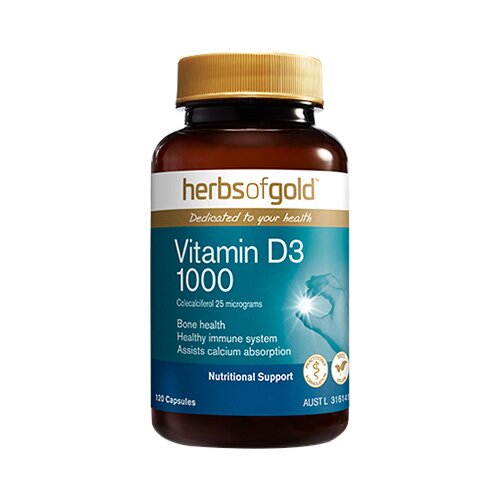
Herbs of Gold Vitamin D3 1000 – 120 Capsules
Provides 1,000 IU (25 micrograms) of Vitamin D3 per capsule.
Best for: adults and children over 12 who want a simple once-daily Vitamin D3 option.
This vegan-friendly D3 is derived from lichen and supports calcium absorption, bone mineralisation, muscle strength and healthy immune system function. The label directs adults and children over 12 to take one capsule daily with food, or as advised by a health professional. One capsule provides the lower end of the RACGP’s usual replacement range for mild, uncomplicated adult deficiency; diagnosed deficiency still needs individual advice.
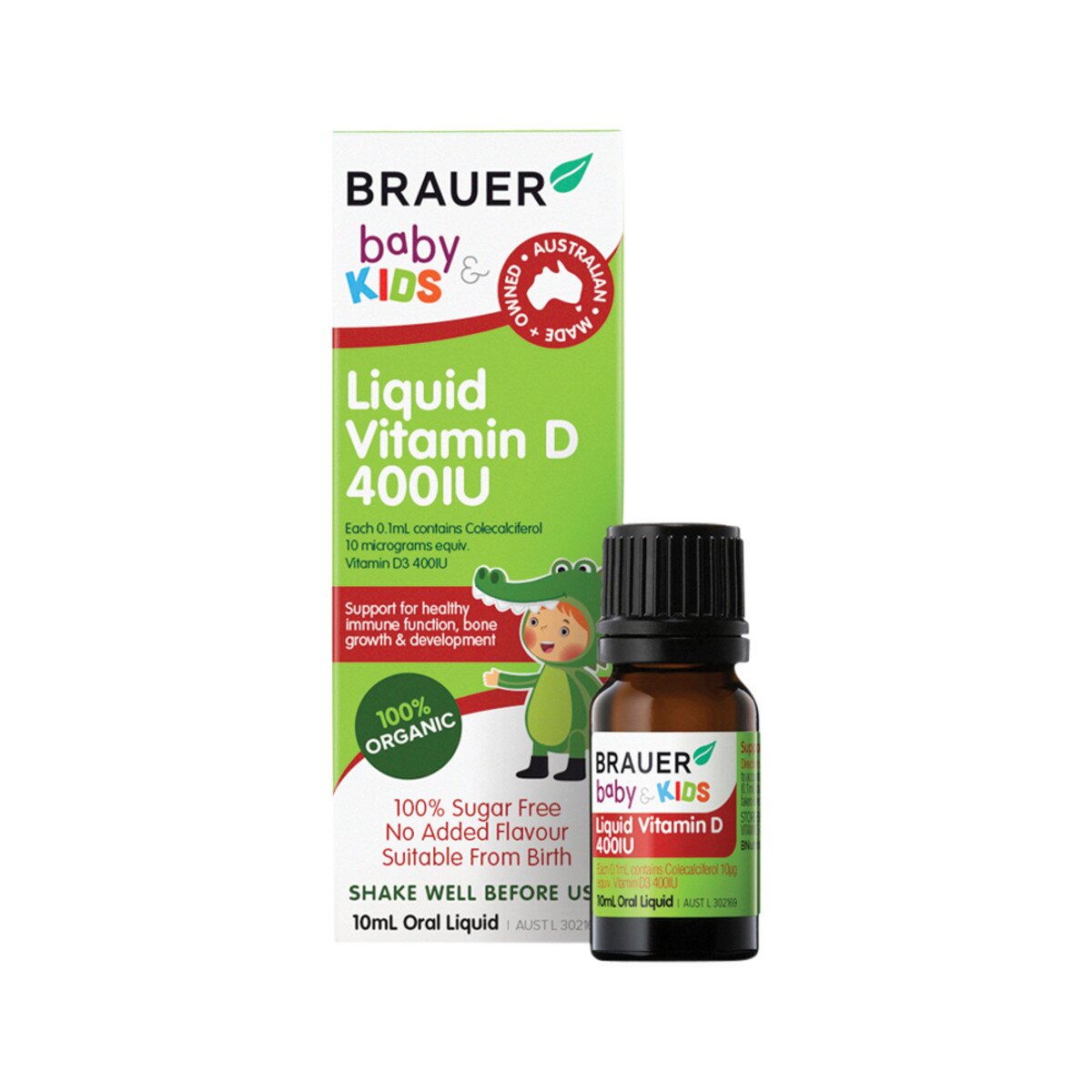
Brauer Baby & Kids Liquid Vitamin D 400IU – 10 mL
Provides 400 IU (10 micrograms) of Vitamin D3 per 0.1 mL, equal to two drops.
Best for: families who need a flexible liquid format, including infants and children when supplementation is appropriate.
The formula is sugar-free and labelled from birth. The current label directs infants and children up to 12 years to take two drops daily, while adults and children over 12 take five drops daily (1,000 IU). Because children’s needs depend on age, risk factors and the reason for supplementation, speak with a GP or pharmacist before using it to treat a suspected or confirmed deficiency.
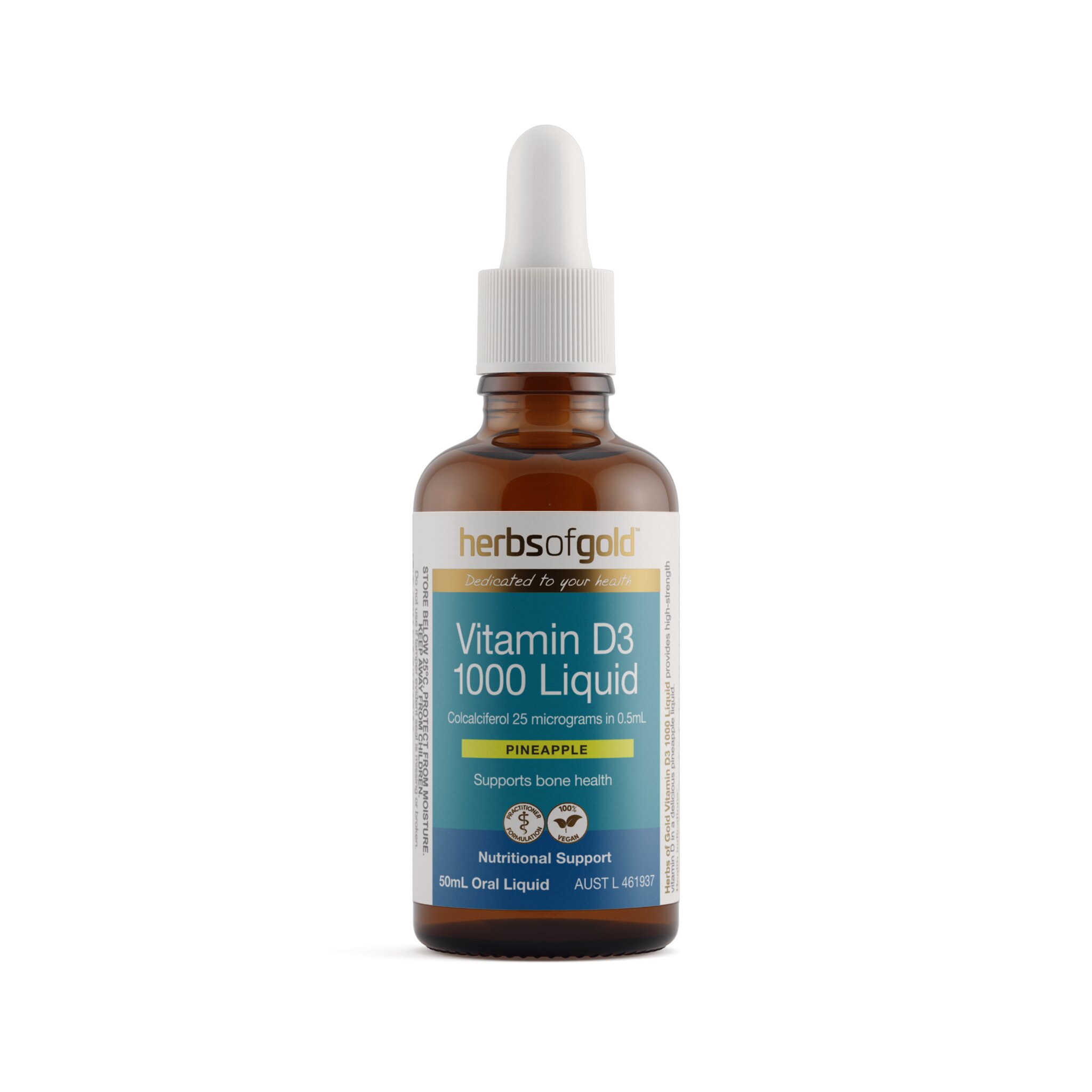
Herbs of Gold Vitamin D3 1000 Liquid – 50 mL
Provides 1,000 IU (25 micrograms) of plant-based Vitamin D3 per 0.5 mL.
Best for: people who prefer a vegan-friendly liquid, including children when the label directions are appropriate.
Organic Instinct lists 0.5 mL once daily with food for adults and children over 12, and 0.25 mL once daily with food for children aged 1–12. The pineapple-flavoured liquid uses Vitashine D3 and can be easier for people who do not want a capsule. Use the supplied measure and follow the current bottle.
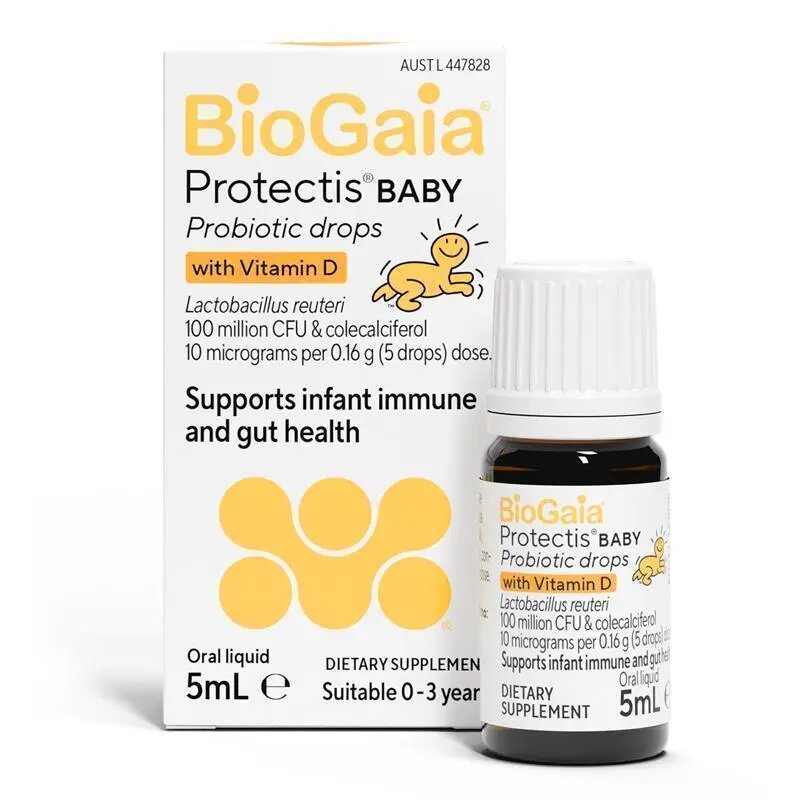
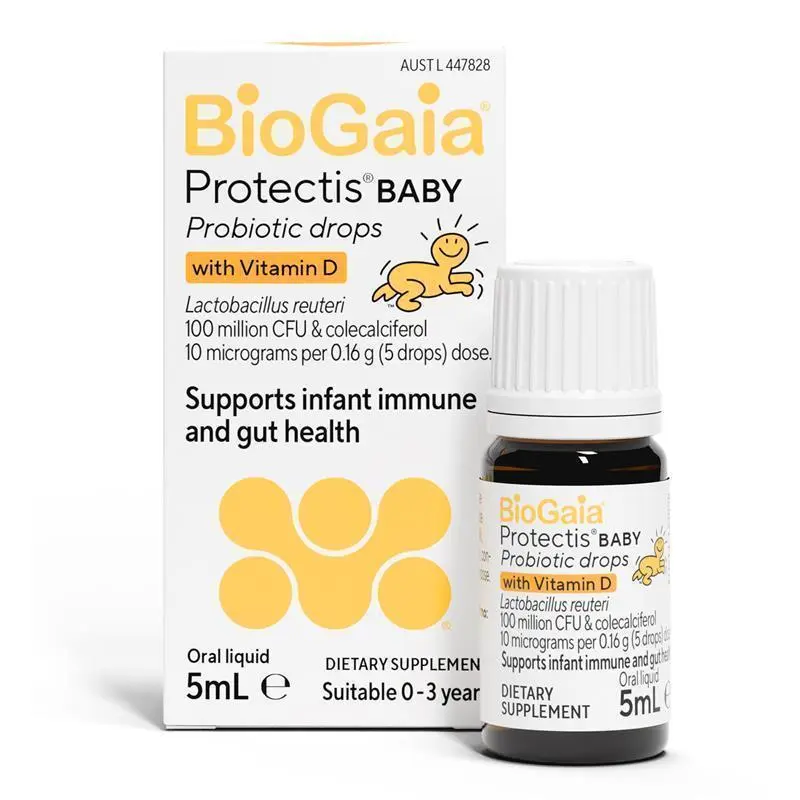
BioGaia Protectis Baby Probiotic Drops with Vitamin D – 5 mL
Provides 400 IU (10 micrograms) of Vitamin D3 plus 100 million CFU of L. reuteri Protectis per 5-drop dose.
Best for: breast- or bottle-fed infants when both the probiotic and Vitamin D formula are suitable.
Organic Instinct lists five drops once daily for infants and describes the product as suitable from birth to three years. Shake the bottle, form the drops slowly and give them from a spoon, the breast, or in breast milk or formula. Do not add the drops to hot food or drinks. Ask a GP, pharmacist or child health professional before starting supplements for a baby; the manufacturer does not recommend this product for premature infants.
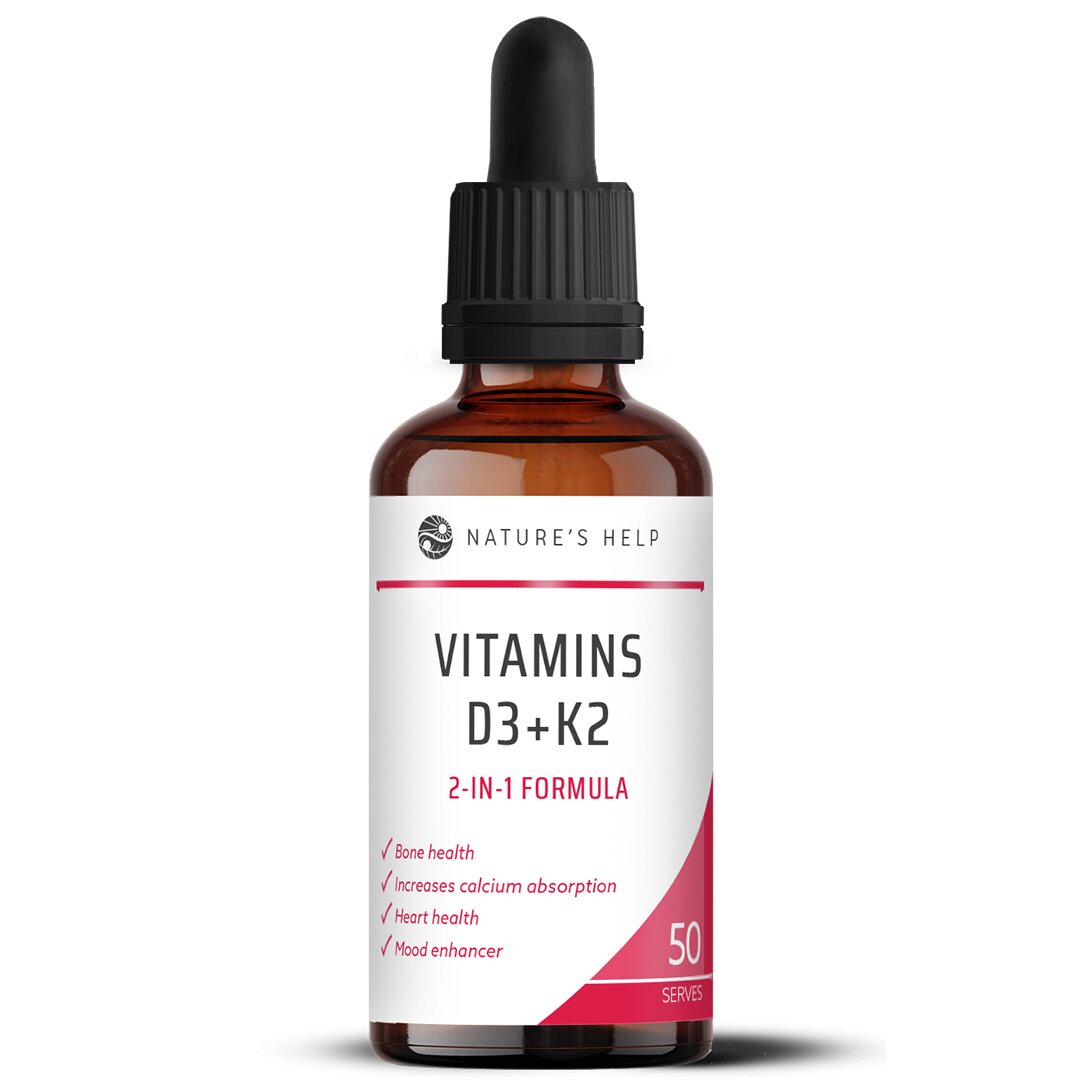
Nature's Help Vitamin D3 & K2 Drops – 50 mL
Provides 1,000 IU (25 micrograms) of Vitamin D3 and 180 micrograms of Vitamin K2 per 1 mL (25 drops).
Best for: people who prefer a concentrated liquid D3 + K2 formula and have confirmed that K2 is suitable for them.
Organic Instinct directs users to take 25 drops (1 mL) under the tongue or in a small glass of water or juice daily. The MCT-oil base supports delivery of these fat-soluble vitamins. Do not exceed the recommended intake, and do not use K2 without professional advice if you take warfarin or another Vitamin-K-antagonist.
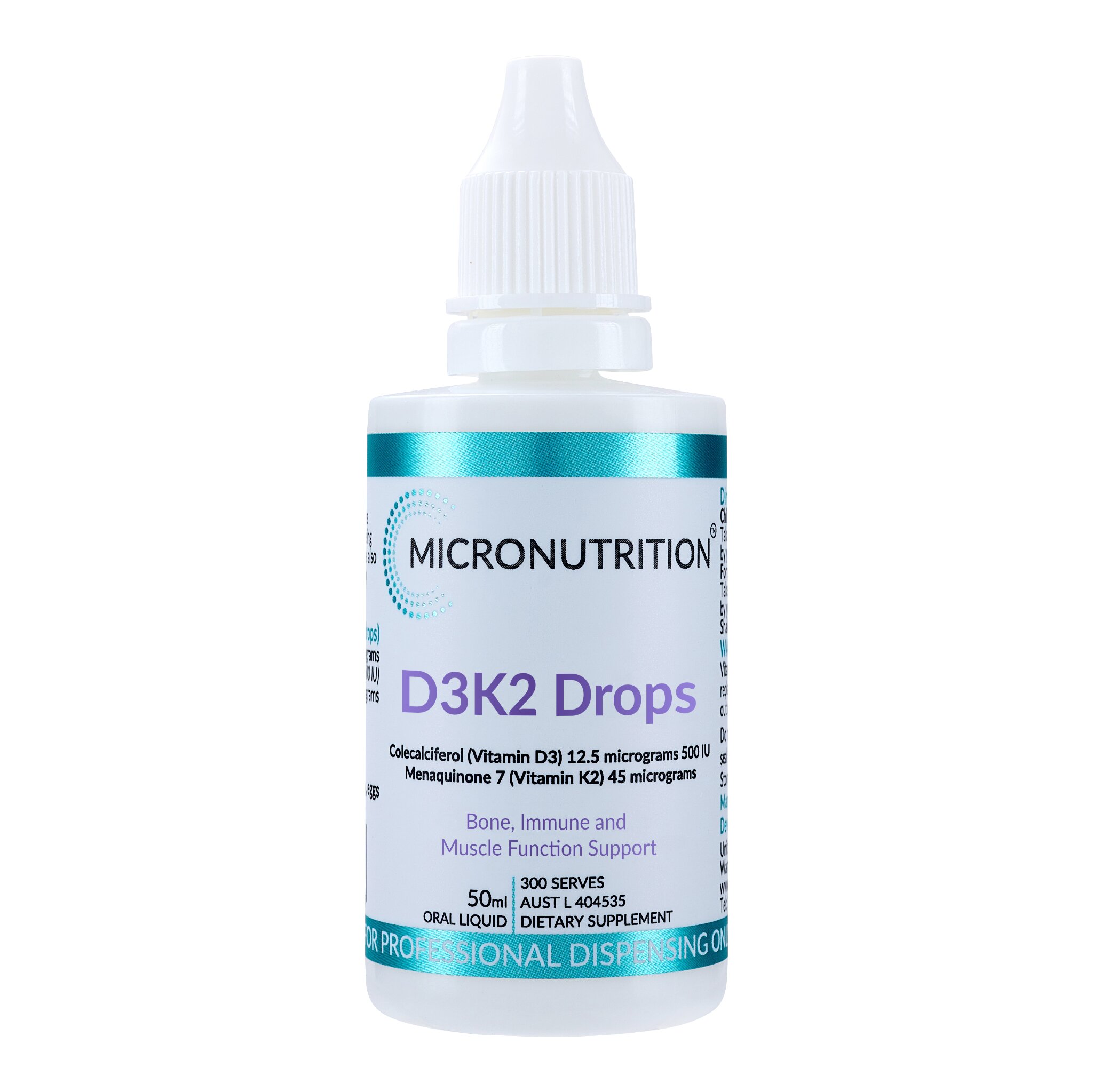
Micronutrition Vitamin D3 & K2 Drops – 50 mL
Organic Instinct lists 500 IU (12.5 micrograms) of Vitamin D3 and 45 micrograms of Vitamin K2 per stated dose.
Best for: families wanting age-based liquid directions and a lower-strength D3 + K2 option.
Organic Instinct's directions say to shake well, then give two drops daily to children under 10 and four drops daily to people aged 11 and over, unless a health professional advises otherwise. Because the listing presents the nutrients as an ‘amount per dose’ alongside age-based drop counts, use the current bottle as the final guide to the amount delivered by each serving.
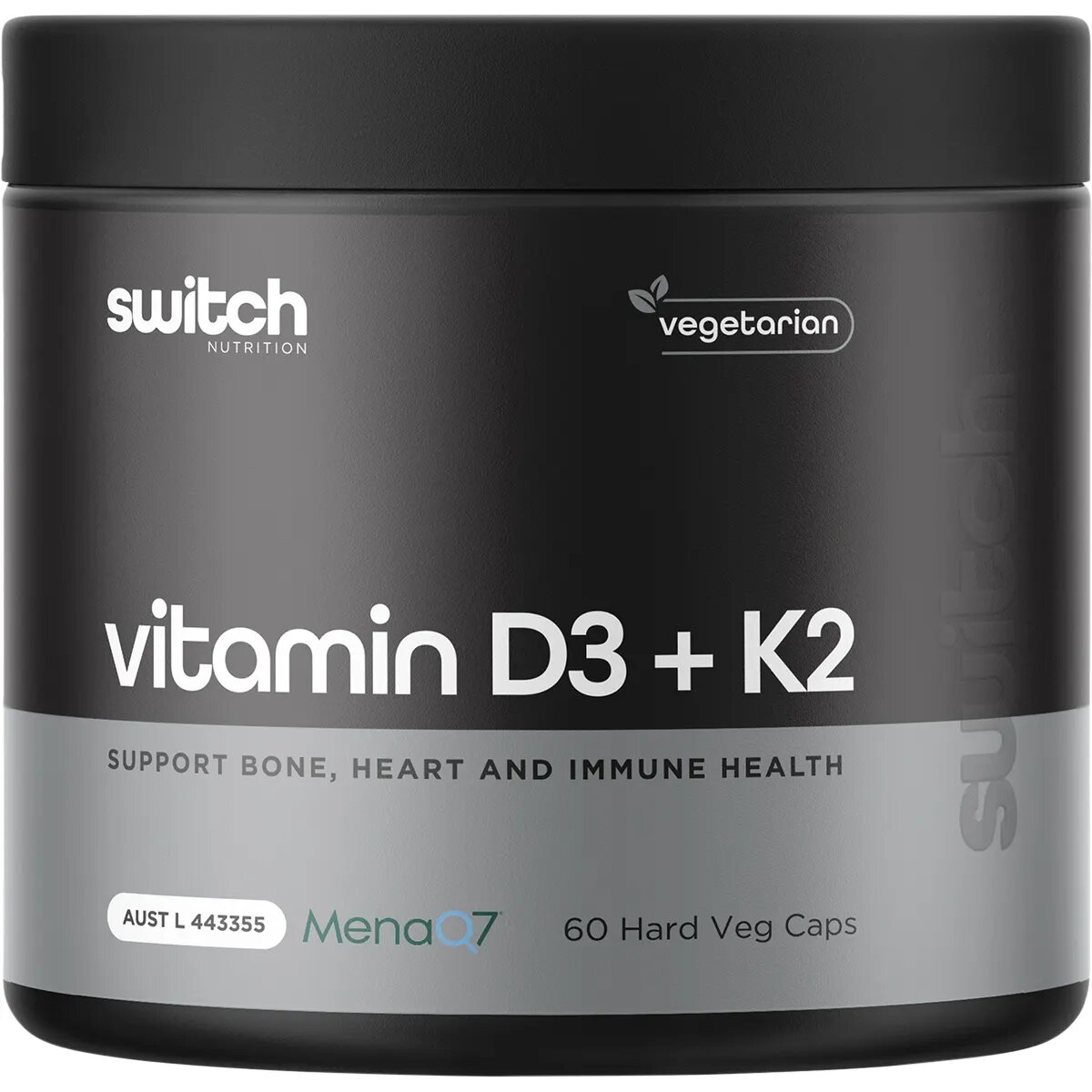
Switch Nutrition Vitamin D3 + K2 – 60 Capsules
Provides 1,000 IU (25 micrograms) of Vitamin D3 and 90 micrograms of Vitamin K2 (MK-7) per capsule.
Best for: adults who prefer a simple once-daily capsule combining D3 and K2.
Organic Instinct directs users to take one hard vegetarian capsule daily with food, or as recommended by a healthcare practitioner. Taking it with a meal also suits the fat-soluble nature of Vitamins D and K. Check with your clinician before use if you take an anticoagulant medicine.
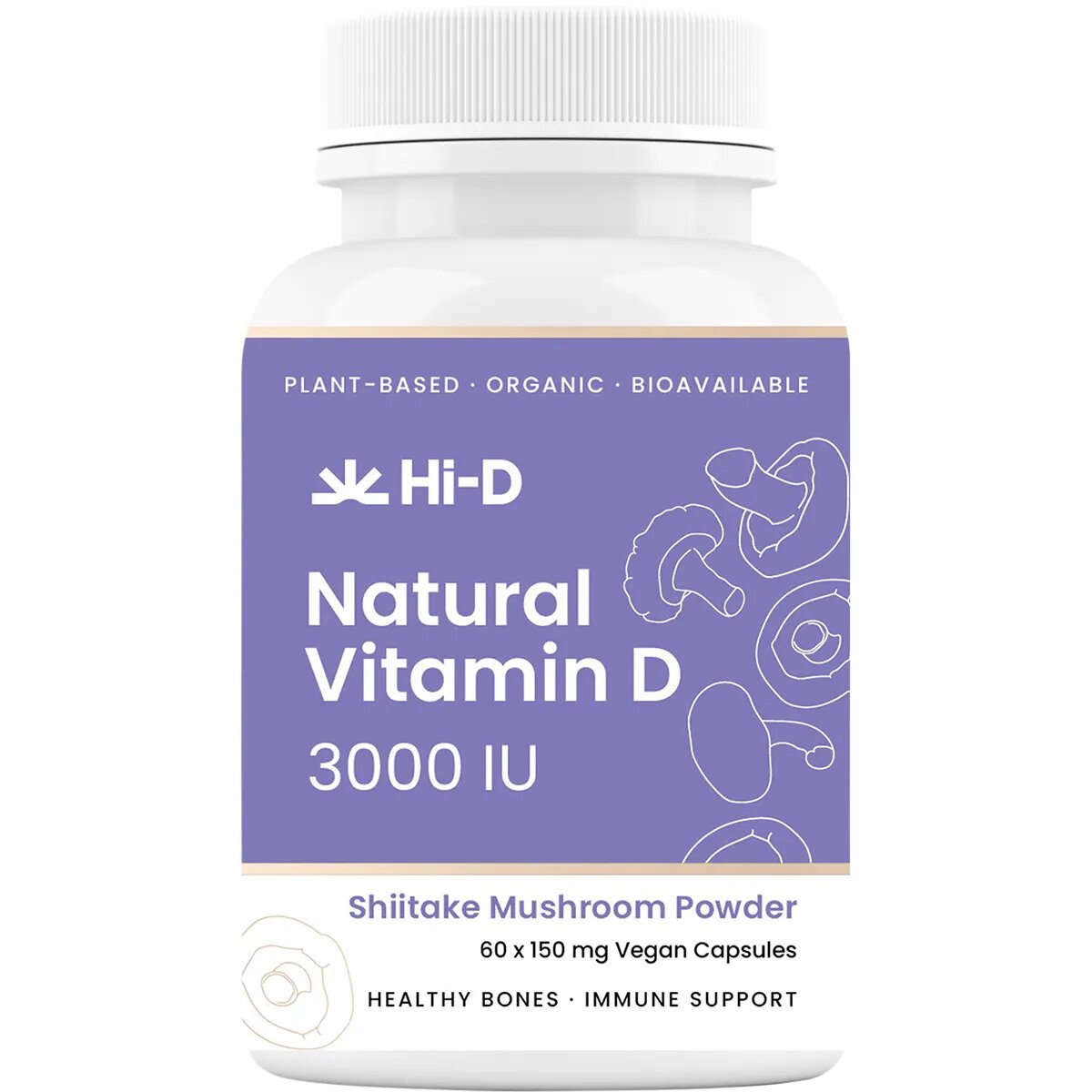
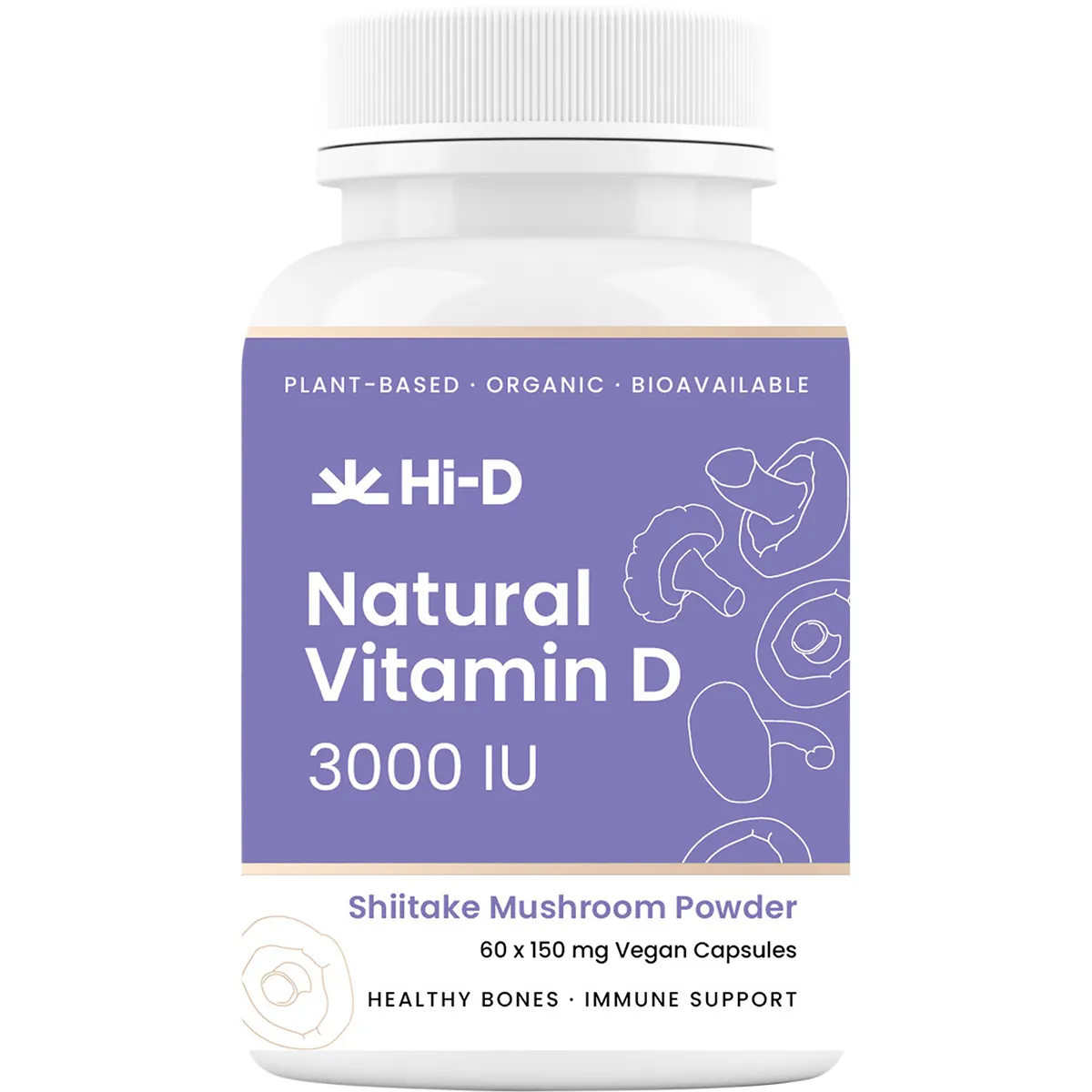
Hi-D Natural Vitamin D 3000 IU – 60 Capsules
Provides 3,000 IU (75 micrograms) of Vitamin D2 per capsule from organic shiitake mushroom fruiting body.
Best for: vegan adults who specifically want a mushroom-derived D2 option and have checked that the higher strength suits their needs.
Organic Instinct directs users to take one capsule once daily with water or juice and a meal; the capsule can also be opened onto food. This is Vitamin D2 rather than D3 and is close to the Australian adult upper level, so check the total from all supplements and seek advice if using it for a confirmed deficiency.
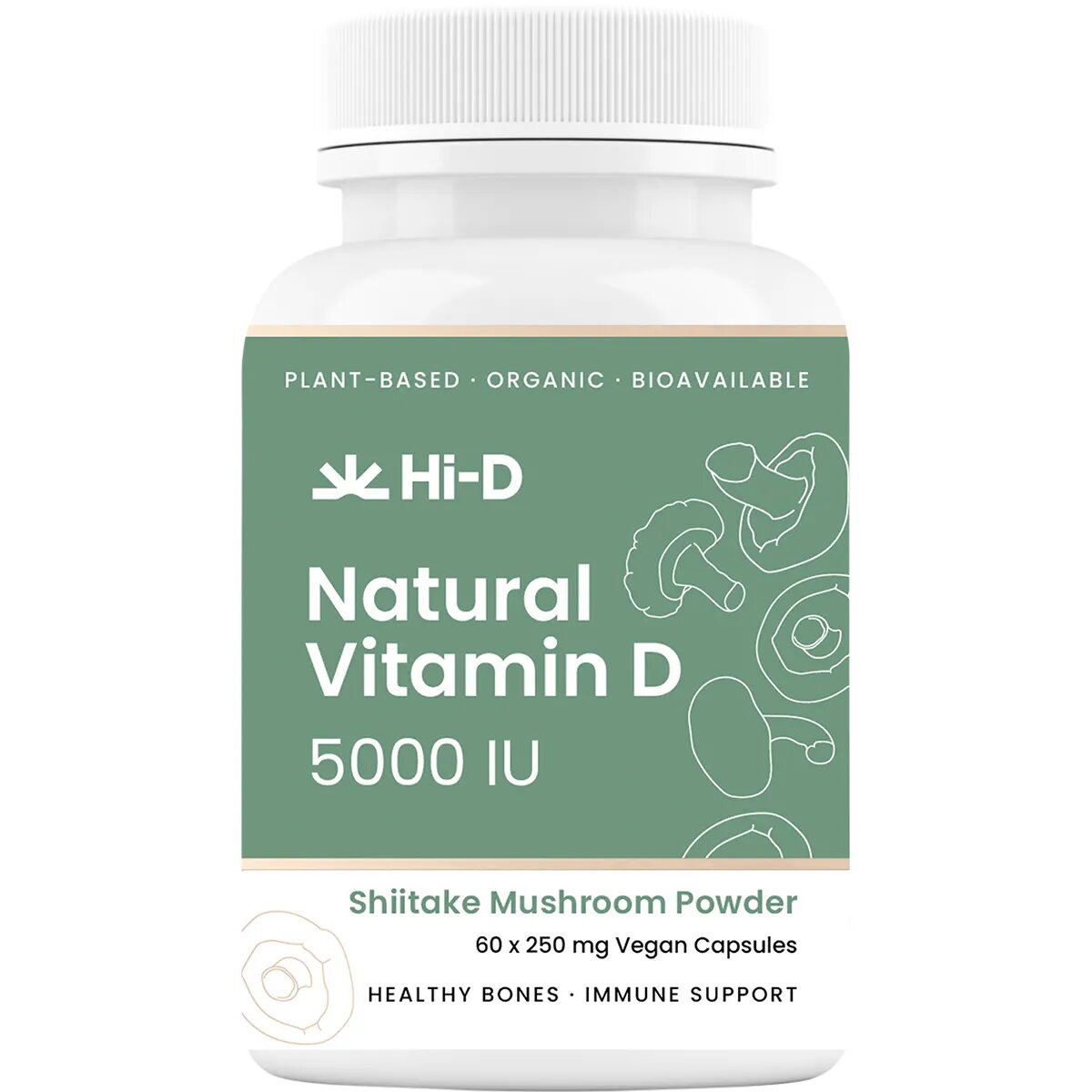
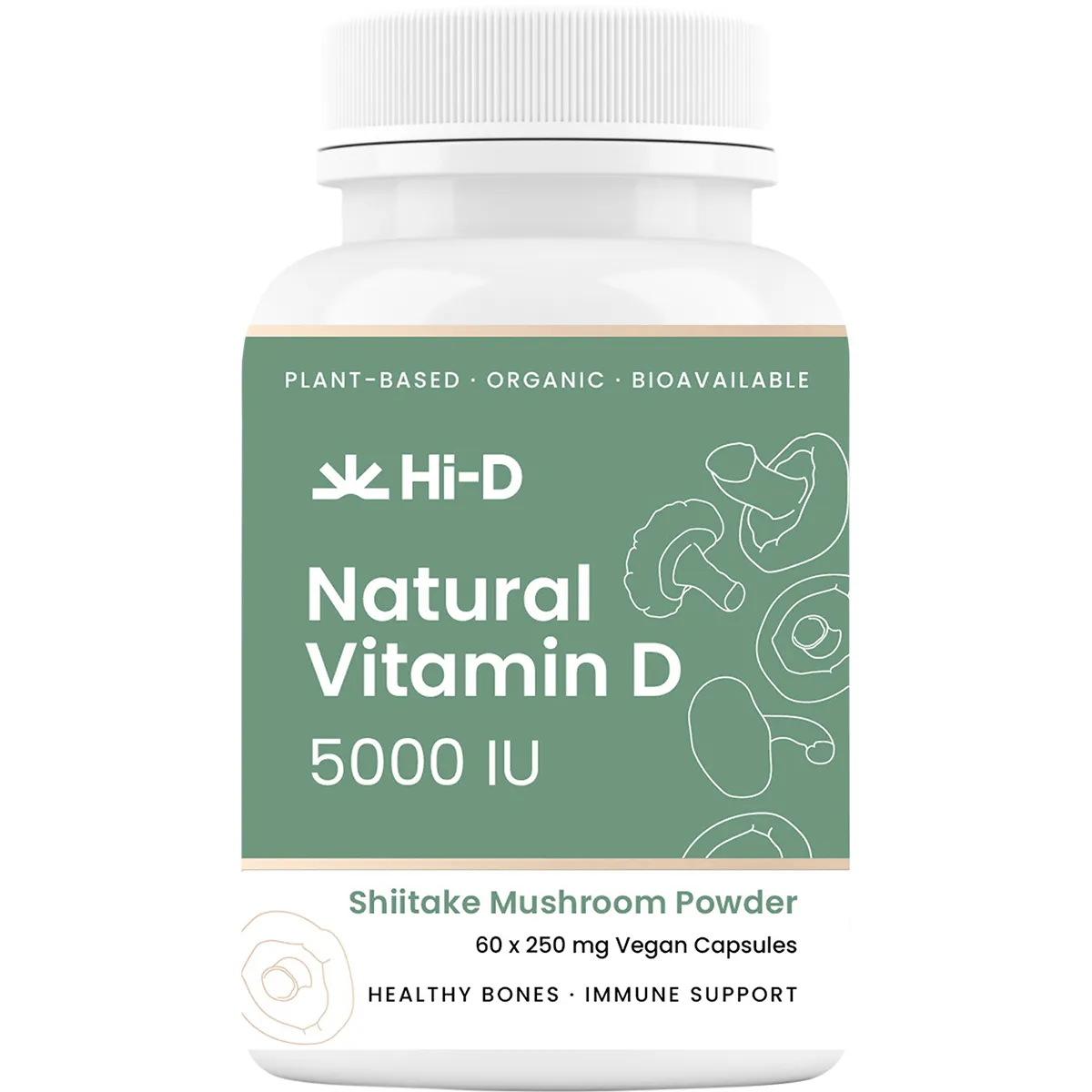
Hi-D Natural Vitamin D 5000 IU – 60 Capsules
Provides 5,000 IU (125 micrograms) of Vitamin D2 per capsule from organic shiitake mushroom fruiting body.
Best for: people whose healthcare professional has recommended a high-strength Vitamin D2 product for a defined reason.
Organic Instinct's listing says one capsule can be taken once daily with water or juice and a meal, or opened onto food. However, 5,000 IU exceeds the Australian adult upper level of 3,200 IU per day. It should not be presented as a routine self-selected maintenance dose; use it under professional guidance and for the purpose and duration recommended.
The bottom line
Vitamin D supports strong bones, healthy muscles and normal immune function, but low levels often do not announce themselves clearly. If you have ongoing tiredness, muscle weakness or bone pain — or you have risk factors such as limited sun exposure, darker skin or covering most of your skin — speak with your GP about whether testing or supplementation is appropriate.
When you do supplement, choose the right strength for the job, take it consistently with food and avoid assuming that a higher dose is always better. If you are unsure which format may suit you or your family, our Organic Instinct team is here to help you compare the options before you speak with your health professional.
|
Shop with confidence at Organic Instinct |
Important information
This article provides general nutrition information only and is not a substitute for individual medical advice. Always read the label and follow the directions for use. Speak with a GP or pharmacist before giving supplements to an infant or child, during pregnancy or breastfeeding, if you have kidney disease, high calcium levels or a condition affecting Vitamin D metabolism, or if you take prescription medicines. Vitamin supplements should not replace a balanced diet.